

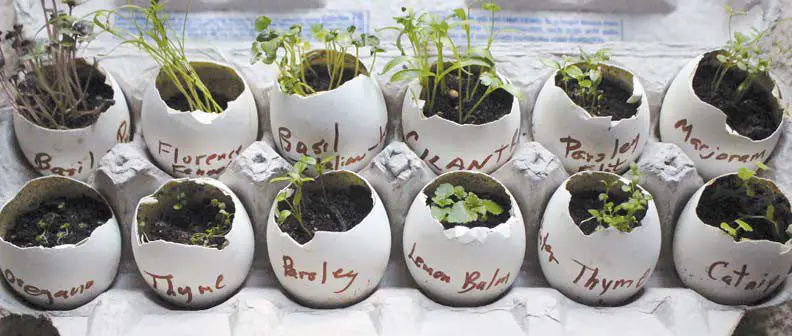
Child’s indoor eggshell herb garden
As fall transitions into winter so, too, the garden changes. The summer heat-loving vegetables like beans, cucumbers, squash, and tomatoes are gone. Winter is time to grow flavor and fragrance with culinary herbs. Herbs require little care and have few insect pests and diseases.
Skip store-bought dried herb shakers and plant your own winter flavoring garden with cool-season annual, biennial, and perennial culinary herbs. Easy to grow herbs bring fresh flavor to salads, sandwiches, soups, stews, and sauces.
Chervil (Anthriscus cerefolium) has light green lacy, fern-like leaves with a mild anise or licorice flavor and is used to flavor salads, soups, sauces, and sautés.
It’s easy to grow from seed in a cool, partly shady location in the ground, raised beds or containers.
Common chives, Allium schoenoprasum, and Garlic chives, Allium tuberosum, are champions of cool weather as long as their roots have space to grow. Well-rooted chives are hardy in USDA zones 3-10 and prefer six hours of sunlight per day in compost rich and well-drained soil.
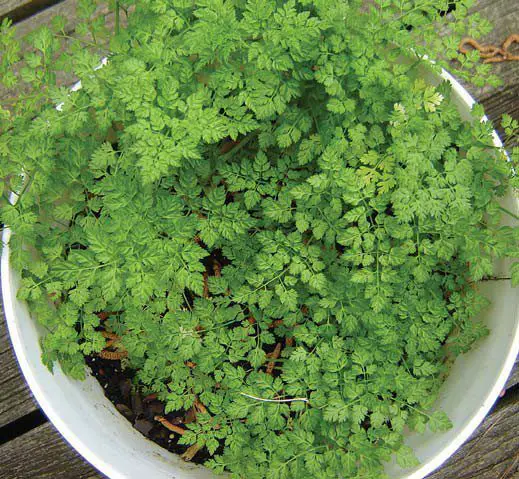
Container grown chervil
Cilantro (Coriandrum sativum) is an annual cut-and-come-again herb used in stir-fries, rice and noodle dishes, soups, pasta salads, and coleslaw. Cilantro is the name for the leaves and stems of coriander. When cilantro flowers bear seed, the seeds are called coriander.
Lemon Balm (Melissa officinalis) is a perennial preferring full sun and well-drained soil and thrives with regular shearing. The distinct lemon flavor is used for teas and salads.
Mints (Mentha spp.) have apple, chocolate, lemon, orange, peppermint, spearmint flavors, etc. Since mints are vigorous growers and spread everywhere through underground rhizomes, it is best to contain mints in pots and don’t let them flower.
Parsley (Petroselinum crispum) is a biennial requiring patience and total darkness indoors for three weeks to germinate. It’s worth the wait since parsley can flavor almost anything.

Italian oregano (Origanum vulgare) and Greek oregano ( Origanum vulgare hirtum) are frost hardy Mediterranean perennial herbs for flavoring food. Oregano needs a full sun location. Oregano is used in vinaigrette, pesto, and spaghetti and pizza sauce.
Rosemary ( Salvia rosarinus), an upright woody evergreen perennial, is easily rooted from cuttings. Grow rosemary in full sun. Rosemary, a staple in Mediterranean and Greek cooking, is used to flavor soups, breads, and meats.
Garden sage (Salvia officinalis) aka the ‘turkey herb’ or ‘herb of wisdom and long life,’ is a shrubby perennial in the mint family. In cold northern climates it dies down in winter. In mild winters, the cooler temperatures of autumn are just what garden sage needs to perk up its leaves and become an ornamental as well as an edible. Sage has been giving flavor and fragrance to humanity consistently over the ages.
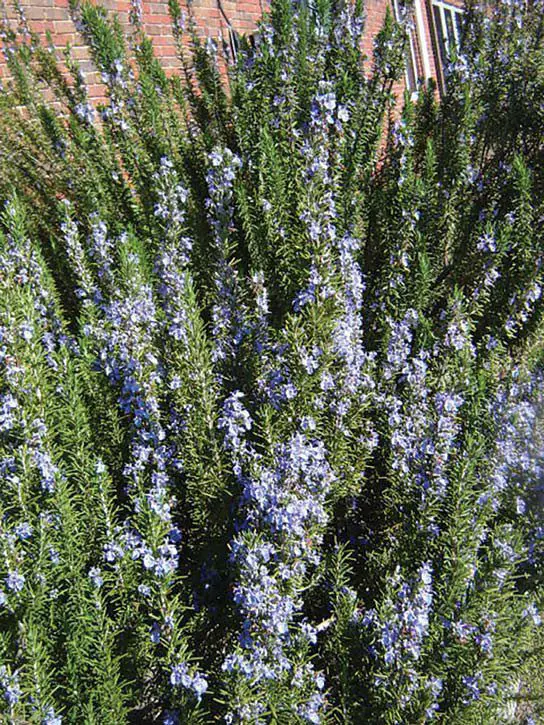
Rosemary in flower in winter
French lemon sorrel (Rumex scutatus) is one of my favorite hardy perennial herbs. I place the delicious lemon-flavored leaves atop fish and in salads, soups, and dressings. The low-maintenance, productive plant thrives in any herb garden, making it an easy choice for novice and experienced gardeners.
Garden thyme, (Thymus vulgaris), English and French varieties, have aromatic evergreen foliage and tons of blossoms attracting bees. Tangy thyme flavors soups, stews, and casseroles.
Include children in growing herbs by sowing seeds of cool-season herbs in a windowsill egg carton eggshell planter or a sunny window box.
Sandy Mush Herb Farm in Leiscester, N.C. is a wonderful source of herb plants. sandymushherbs.com
Park Seed in Hodges, S.C. is a superb source of herb seed. www.parkseed.com
Loading Comments